Comparisons6 min readUpdated October 2026
Remote video monitoring vs. security guards
What each one does well, where each one falls short, and a quick way to total what guard coverage costs you now.
VDS Resource Center
The short answer
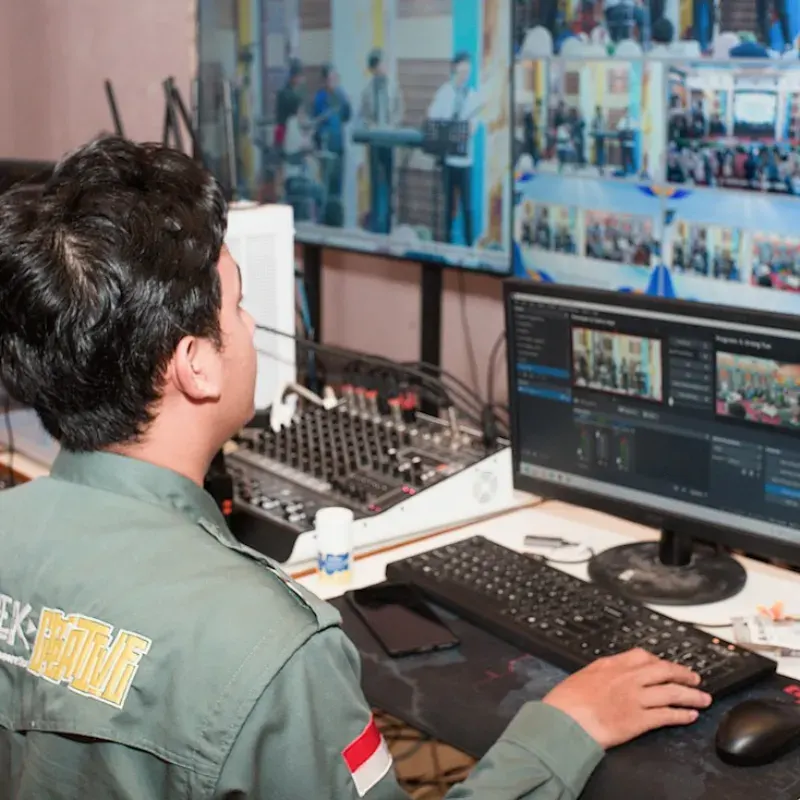
Guards and remote monitoring solve the same problem in different ways. A guard is a physical presence in one place. Remote monitoring is a set of trained eyes on every camera at once, with a voice on site and a direct line to police.
Most properties that switch do so for one of two reasons: a single guard cannot see the whole site, or the hourly cost of covering every night adds up faster than expected.
How they compare
| Question | On-site guard | Remote video monitoring |
|---|---|---|
| Where is the coverage? | Wherever the guard is standing or driving at that moment | Every camera view at once |
| What happens on a real event? | The guard sees it, if nearby, and responds in person | An operator verifies it on video, speaks over site speakers and calls your contact or police |
| Physical presence | Yes. A person is on the property | No. Deterrence is by voice, lights and police dispatch |
| Record of what happened | A written shift report | Video plus a logged response for every event |
| How cost grows | By the hour, per guard, per site | By site and camera coverage |
Neither option is right for every site. The table shows where each one is strong.
Where a guard still makes sense
Some jobs need a person on the ground. If your site needs someone to check badges at a gate, unlock doors, walk visitors in or handle people face to face, that is guard work.
Many sites pair the two: a guard during active hours and remote monitoring overnight and on weekends, when the property is empty and the main job is to spot and deter.
Where remote monitoring is stronger
Open lots, job sites, storage facilities and yards share a pattern. They are large, they have many ways in and nobody is there after hours. One guard cannot watch a fence line that takes ten minutes to walk.
- Coverage. Every camera is watched, not just the area a guard happens to be near.
- Speed. An operator can speak to an intruder through on-site speakers while the person is still at the fence.
- Evidence. Every event is documented with video and an incident report.
- Cost. VDS describes its services as more affordable and reliable than hiring traditional security guards, with packages built so you only pay for what you need.
Work out what guards cost you now
Before you compare quotes, total what you spend today. Guard coverage is billed by the hour, so the yearly figure is often larger than people expect.
Questions to ask before you switch
- Which hours is the site empty, and what do I need a guard to physically do in those hours?
- How many cameras cover the perimeter and entry points today?
- Who should be called first when something happens at 2 a.m.?
- Does the monitoring provider cap events, or watch everything?
- Is a person or software making the final call on a threat?
For a longer list, read 10 questions to ask a video monitoring provider.